Do I need a battery with my solar panels?
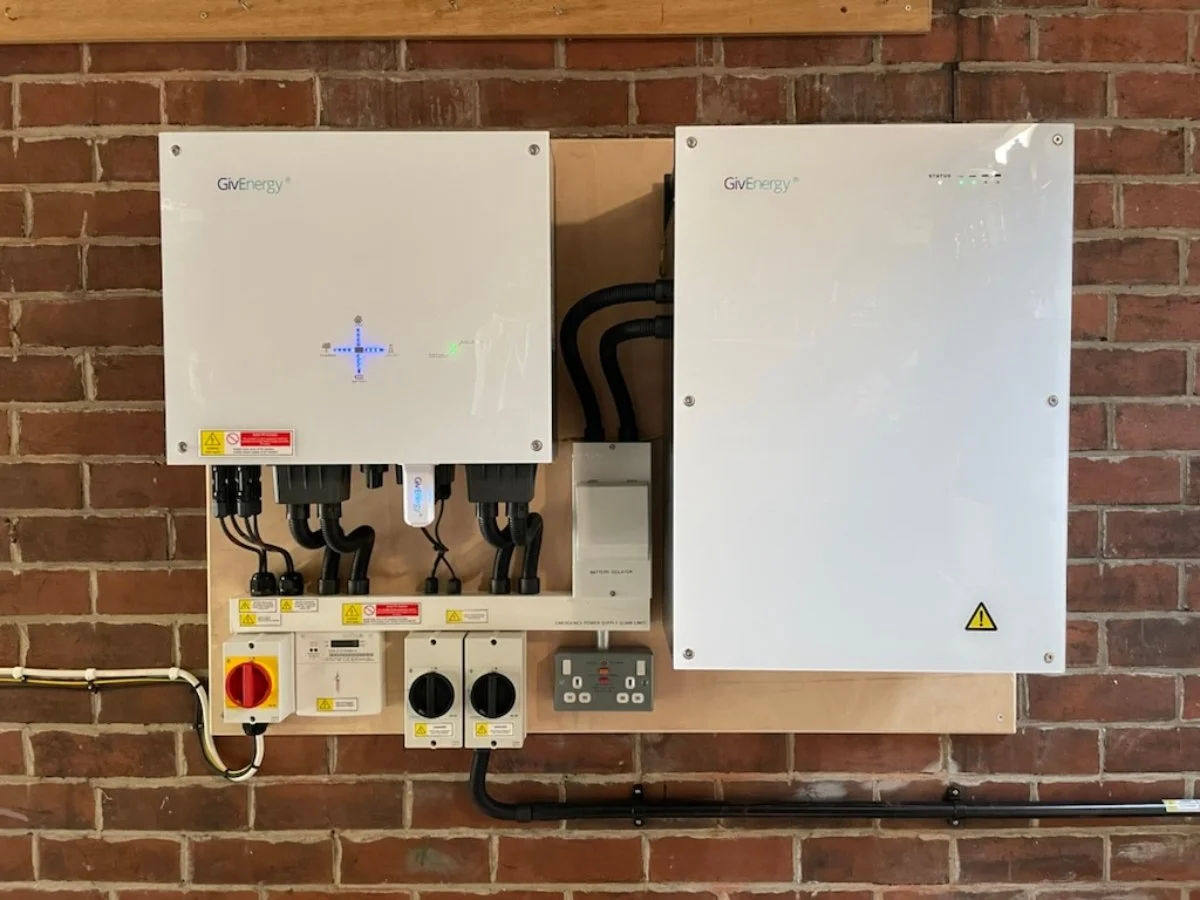
A handover of a system to a couple who had just bought a house, on which we had installed a large PV system, prompted me to write this blog about battery storage on large residential solar PV systems owned by low energy users.
The couple were likely going to be exporting large amounts of energy during summer, sold to the grid through generous export tariffs, ready for buying back in winter. So, should you bother with the expense of a battery in this scenario?
Do you always need a battery with solar panels?
Battery storage is often presented as the natural companion to solar PV. Panels generate the energy, the battery stores it, and you use more of what you produce. It’s a neat solution and, in most cases, it works well. But it isn’t always the right answer for every household.
If you’re a relatively low energy user who is generating far more electricity than you consume, perhaps twice as much, the question starts to become less about technology and more about value.
When might a solar battery not be worth it?
There’s one point that tends to cut through a lot of the noise: what is energy stored in your battery actually worth?
With the presence of some very generous export tariffs from companies such as E.ON and Octopus, the value of storing solar energy is only the difference between what you would have paid to import that electricity and what you could have earned by exporting it.
If you can buy electricity at 25p per kWh, but export it for 15p per kWh, then the real value of storing that unit of energy is 10p, not 25p.
This can matter depending on what is motivating you to think about battery storage. It’s where a lot of battery payback calculations can begin to fall apart.
How do export tariffs affect solar battery payback?
For households that export large amounts of solar generation, particularly through tariffs offered by suppliers such as Octopus Energy, the grid is already acting as a kind of financial balancing mechanism.
You export during periods of surplus, and that income offsets what you need to import later. A battery is very effective at shifting energy from day to night, but it can’t shift energy from summer to winter.
This is one reason a battery may not always improve payback for a low energy household with a large solar PV system. If the export tariff is strong enough, the financial benefit of storing that energy can be smaller than expected.
When does battery storage make sense with solar panels?
This isn’t an argument against batteries. In fact, the vast majority of systems we install do include them.
For many households, the benefit isn’t just about storing solar energy.
With the right setup, a battery allows you to take advantage of cheaper overnight electricity tariffs, charging when rates are low and using that energy during more expensive periods. In that context, the battery becomes a tool for energy arbitrage, not just solar storage.
For homes with higher evening usage, or those actively using time-of-use tariffs, that can make a significant difference.
Is exporting solar energy a waste?
For environmentally conscious homeowners, it’s worth recognising that exporting energy isn’t wasted effort.
When you send excess solar generation back to the grid, it is still displacing electricity that would otherwise have been generated elsewhere, often from higher carbon sources. A battery increases self-consumption, but it doesn’t necessarily multiply the environmental benefit in the way it’s sometimes assumed to.
Will solar batteries become more valuable in future?
Where this all becomes less certain is in the long term.
Export tariffs are relatively attractive at the moment, but with the continued rollout of solar PV across the UK, it’s reasonable to expect that daytime generation will increase significantly. More supply typically puts downward pressure on price.
If export rates reduce over time, the equation begins to shift. The gap between import and export prices may widen, and in that scenario, storing energy becomes more valuable. The case for adding batteries to your PV system becomes stronger.
That doesn’t mean batteries are a future-proof decision today, but it does mean the balance could change.
Should I install solar panels without a battery first?
For a low energy user generating a large surplus, it’s often perfectly reasonable to install solar PV without a battery initially, benefit from current export tariffs, and review the position later.
You could, after all, have a battery-ready system built. This allows for the easier addition of a battery in the future. A system capable of this would also benefit from the enhanced monitoring that a battery storage system can provide, which can help with decision-making later.
If you are installing a battery, it should be done with a clear understanding of what it’s actually doing for you. That might be reducing peak imports, supporting tariff optimisation, or providing backup capability.
So, do I need a battery with my solar panels?
Batteries are a good solution, but they are not a universal one.
For some households, they are central to making the numbers work. For others, particularly those exporting large amounts of energy, the grid in combination with export tariffs may already be doing much of the heavy lifting.
The key question is not whether you can install a battery. It’s whether the battery is solving the right problem.
At Grid Neutral, we can help you make that decision and design a system that fits the way you actually use energy.