
Reducing Grid Reliance at a Private Nursing Home
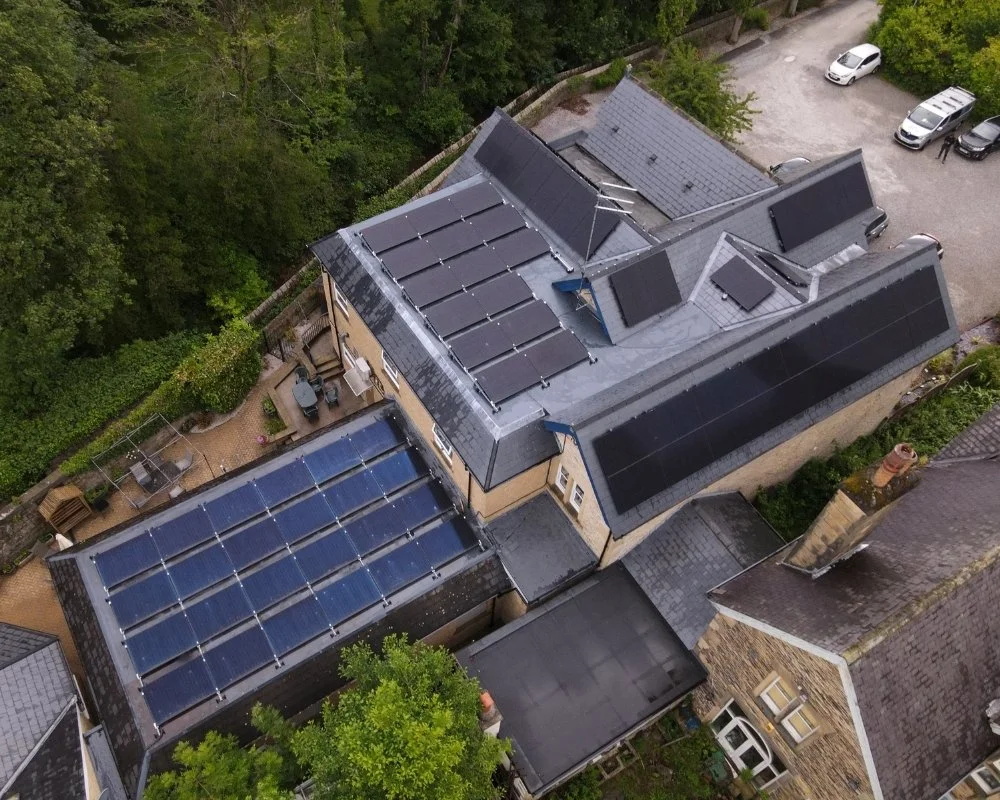
We recently designed a commercial solar PV and battery storage system for a private nursing home in Sheffield.
With residents on site around the clock, the nursing home uses electricity throughout the day and into the evening. Making better use of the roof space, the aim was to reduce the amount of electricity bought from the grid and store more solar energy for use after generation drops.
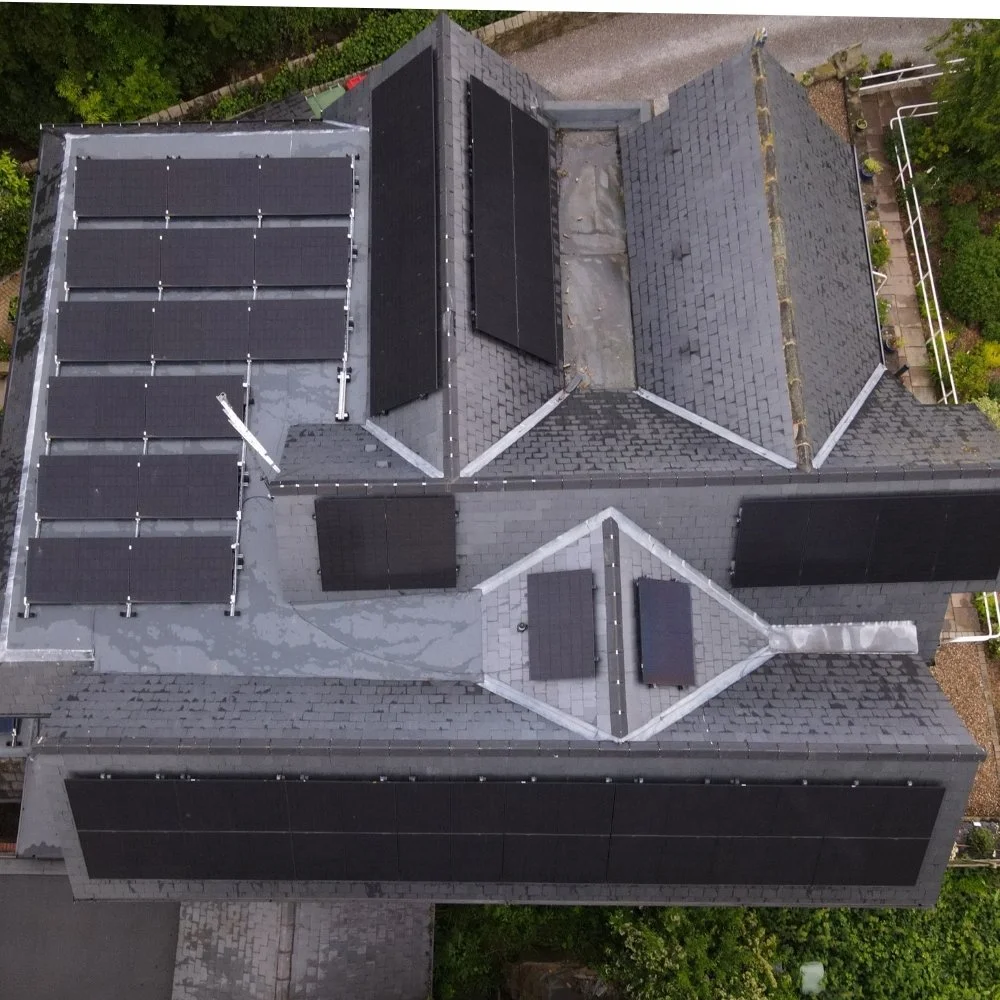
The building has several roof sections with different pitches and orientations. We used PV*Sol software to model the site in detail before finalising the design, taking shading and the nursing home’s annual energy use into account.
What the system includes
The complete system features:
75 Q Cells solar panels
31.16 kWp of installed solar capacity
A 32.3 kWh Sigenergy battery system
A Sigenergy hybrid inverter
51 Tigo optimisers on the new panels
The design incorporates a 24-panel solar array that we installed previously, alongside 51 new Q Cells panels installed across the available roof areas.
Making the most of a complex roof
This wasn’t a simple single-roof installation. The panels are distributed across several parts of the building, with a mix of south-facing, east-facing and west-facing roof sections.
The design uses the available space carefully, with some panels sitting on lower-pitched roof areas, and others fitted to steeper sections of the building.
Tigo optimisers are included on the new panels to help manage differences in shading and roof orientation. This allows each part of the array to perform more effectively across the day.
Designed around the nursing home’s energy use
The nursing home uses around 41,500 kWh of electricity each year.
The modelled system is expected to generate 25,292 kWh annually, with around 16,136 kWh used directly on site. This means solar and stored energy could cover 38.8% of the nursing home’s annual electricity consumption.
The battery is expected to supply around 4,362 kWh of stored energy each year, helping the nursing home use more of its solar generation outside peak production hours.
Cutting carbon emissions
The proposed system is expected to reduce carbon emissions by around 11.7 tonnes each year.
That’s a meaningful reduction for a building with consistent energy demand, and it comes from making better use of roof space that was already available.
Looking at solar and battery storage for your organisation?
Commercial solar works best when the design is shaped around the building and its actual electricity use.
If your organisation has available roof space and uses energy throughout the day, solar panels and battery storage could reduce the amount of electricity you need to buy from the grid.
We use detailed modelling to assess roof layout, shading and usage patterns before recommending a system.